

This site contains information that could quite literally save a person’s life. It certainly puts a tremendous healing power into people’s hands. Magnesium medicine saves patients from a considerable amount of pain and suffering and is a subject worth mastering if one is a doctor or alternative healthcare professional. Magnesium is essential for life and is a true cellular tonic that helps us heal from the inside out addressing as it does a broad range of fundamental physiological processes.
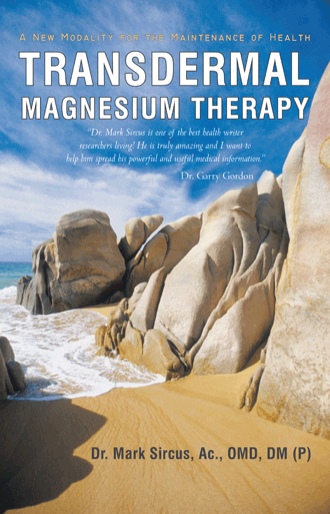
Magnesium chloride is and excellent medicine that is fast acting and safe. Magnesium chloride is also very flexible in terms of methods of application as it can be nebulized, applied orally, transdermally and intravenously in emergency situations. This site and the Transdermal Magnesium Therapy book calls on all doctors, dentists, naturopaths, chiropractors, nurses, acupuncturists and other health care practitioners to learn and apply the full power of magnesium medicine in their practices.
Transdermal Magnesium Therapy is the cornerstone of Natural Allopathic Medicine. At the heart of this system is a trilogy of inexpensive, widely available, safe and effective medicines - magnesium chloride, iodine and sodium bicarbonate. Patients are capable of learning to use these substances and can apply them at home with minimal supervision.
One would not normally think that Magnesium (Mg) deficiency can paradoxically increase the risk of, or protect against cancer yet we will find that just as severe dehydration or asphyxiation can cause death magnesium deficiency can directly lead to cancer. When you consider that over 300 enzymes and ion transport require magnesium and that its role in fatty acid and phospholipids acid metabolism affects permeability and stability of membranes, we can see that magnesium deficiency would lead to physiological decline in cells setting the stage for cancer. Aleksandrowicz et al in Poland conclude that inadequacy of Mg and antioxidants are important risk factors in predisposing to leukemias. Other researchers found that 46% of the patients admitted to an ICU in a tertiary cancer center presented hypomagnesemia. They concluded that the incidence of hypomagnesemia in critically ill cancer patients is high.
When magnesium levels are corrected by the administration of magnesium before, during and after surgery medical complications are significantly reduced to the point where it becomes simply imprudent to perform surgery without it. Dr. Minato at the Department of Thoracic and Cardiovascular Surgery, in Japan, strongly recommends the correction of hypomagnesemia during and after off-pump coronary artery bypass grafting (OPCAB) for the prevention of perioperative coronary artery spasm and his team has actually said that they won’t perform this surgery without its use any longer.
Everyone scheduled for surgery needs to increase their stores of magnesium. In the pre and postoperative phases magnesium can help alleviate pain, decrease blood pressure, alleviate certain heart arrhythmias; it works to prevent blood clotting, relieves depression so common after bypass surgery, and improves energy and cognitive abilities.
Magnesium chloride also offers a great advance in diabetic care that changes the lives of those with metabolic syndrome, hypoglycemia, and type I and II diabetes. My e-Book New Paradigms in Diabetic Care invites endocrinologists, family practitioners, and diabetics to put magnesium into all aspects of their diabetic protocols. Research has proven that proper levels of magnesium lowers insulin resistance, lowers blood sugar, and aids in the prevention and treatment of complication of neuropathy and retinopathy. It enhances blood flow through damaged vessels, and prevents or delays the onset of type II diabetes.
Low serum and intracellular magnesium concentrations are associated with insulin resistance, impaired glucose tolerance, and decreased insulin secretion. Magnesium improves insulin sensitivity thus lowering insulin resistance. Magnesium and insulin need each other. Without magnesium, our pancreas won't secrete enough insulin--or the insulin it secretes won't be efficient enough--to control our blood sugar.
Magnesium is nutritional oil to the heart; it lubricates and facilitates its function. Due to lack of magnesium the heart muscle can develop a spasm or cramp and stops beating. Most people, including doctors, don’t know it, but without sufficient magnesium we will die. It is important to understand that our life span will be seriously reduced if we run without sufficient magnesium in our cells and one of the main ways our lives are cut short is through cardiac arrest (heart attack). Yet when someone dies of a heart attack doctors never say “He died from Magnesium Deficiency.” Administration of magnesium, in the correct way, can eliminate angina pain, muscle spasms, keep blood flowing smoothly and prevent platelet stickiness. Magnesium also produces vasodilation by a direct action as well indirectly by sympathetic blockade and inhibition of catecholamine release. Magnesium dilates both the epicardial and resistance coronary arteries. Magnesium also balances cholesterol and is essential for endocrine stability and function. Most importantly - magnesium prevents calcification of the heart tissues.
The Department of Family Medicine, Pomeranian Medical Academy, states that dietetic factors can play a significant role in the origin of ADHD and that magnesium deficiency can result in disruptive behaviors. Even a mild deficiency of magnesium can cause increased sensitivity to noise, nervousness, irritability, mental depression, confusion, twitching, trembling, apprehension, and insomnia. All of these signs and symptoms lead to heart ache and heart break. Magnesium offers a powerful way to treat depression and helps us deal with stress.
If calcium is not taken with magnesium it will cause much more harm than good. Unabsorbed calcium can lodge anywhere in our body. For instances, if it lodges in your bones and joints, it mimics arthritis; if it lodges in you heart, it mimics arterial lesions. Calcification or calcium poisoning can manifest as heart disease, cancer, wrinkled skin, kidney stones, osteoporosis, dental problems, bone spurs, cataracts and many other health problems. Calcium deposits in the joints are called arthritis; in the blood vessels it is hardening of the arteries; in the heart it is heart disease, and in the brain it is senility. A healthy cell has high magnesium and low calcium levels.